

AI & Data

From data readiness to production-grade AI, agentic platforms, and machine learning that actually ship.

Build My Solution
Build My Solution
Product engineering team collaborating in a modern office

AI is the first technology in a generation that has genuinely changed what a business can do. But changing what's possible and changing what actually ships are two different things.

The pilot was never the hard part. Getting AI to run reliably against real data, in real workflows, at real scale, is where almost everyone gets stuck. That's the problem NZMinds exists to solve.

Sculptural sphere above concentric paths

How NZMinds gets AI from pilot to production

How NZMinds ships products that don't need a rebuild

62 %

of AI initiatives reach full production deployment. We help you be in that group.

Validate before you build

Confirm the product solves a problem worth paying for before writing production code.

Focus

Spread too thin. Engineers split across three initiatives finish none of them on schedule.

Velocity

Shipping every quarter. The backlog doesn’t shrink. It just gets reprioritized, again.

Expertise

Skills you haven’t hired for. The stack you’re modernizing needs people your team was never built around.

THE CAPACITY SOLUTION

The Four Ways NZMinds Fills the Gap, Without the Overhead

Previous
Next
Temporary service image
Staff Augmentation

Best for: filling a specific skill gap on your existing team. Add individual experts to your existing team structure, managed by you.

Temporary service image
Dedicated Team

Best for: a self-contained initiative that needs its own focused team. A fully formed team working exclusively on your roadmap, managed by NZMinds.

Temporary service image
Managed Pods

Best for: a cross-functional outcome, owned end to end, without the scale of a full center. Working hypothesis only, pending AD confirmation, do not publish until confirmed.

Temporary service image
Offshore Development Center

Best for: long-term scale across multiple ongoing initiatives. A long-term, dedicated extension of your engineering org, built for scale.

Not sure if AI is stalling because of a data problem or an expertise gap?

Connect with our experts to get the right assessment of your project.

Services

Our AI & Data Services

Previous
Next
AI/ML Application Development

Custom AI and ML applications built for your specific workflow, not a generic model wrapper.

Temporary service image
Generative AI

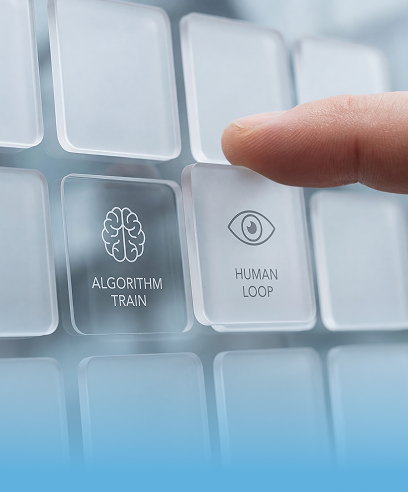
Agentic platforms and generative tools deployed with control and human oversight built in.

Temporary service image
Machine Learning

Models trained, validated, and monitored against the data you actually have, not a demo set.

Temporary service image
Database Management

The data infrastructure underneath every AI initiative, structured so your models can trust it.

Our expertise

Why NZMinds for AI & Data

Validation-first

Data readiness first

We lead with the data foundation, because no AI investment holds up without it.

Full-stack engineering depth

Full-stack AI expertise

Specialists across data, models, and agents who have actually built and deployed AI at scale.

Built for real scale

Control-first architecture

Least-privilege access and human review built into every agent, not added after the fact.

Technical debt prevented by design

Built to scale, not just demo

Every engagement is scoped to move from validated pilot to production, not stop at proof of concept.

Testimonials

Success Validated
by Clients

“They didn't just build what we asked for. They pushed back on the parts that weren't worth building yet, and that saved us a quarter.”

Ruben Curtis Director of Product
Client placeholder

Behind success

Testimonial placeholderBehind success testimonial
Ruben Curtis Chief Executive Officer

“SaleUnio helped us scale with confidence and control. Processes matured, accountability tightened, and delivery accelerated.”

Michael Ten Founder & COO

Real AI & Data
Engagements Stories

See how organizations like yours solved their capacity and capability constraints.

View All Case Studies
Abstract arrows moving forward

Banking & Finance platform · india

Transforming AML Investigations with AI-Driven Anomaly Detection and Case Management

  • +20% Time Reduction
  • Improved Productivity
  • +Fully Audited Evidence Trails
Logo ImageLogo ImageLogo ImageLogo ImageLogo ImageLogo ImageLogo Image
Logotype

20–35%

Average improvement

2–3x

Faster to the right engagement model

200+

Clients served

Only 12% of AI Pilots Reach Production, and the Model Is Rarely Why

The gap is usually production engineering, not the model itself. NZMinds builds AI with control-first architecture, ready to ship, not just to demo.

Build my solution
FAQs

Frequently asked questions

+What is custom software development, and how is it different from off-the-shelf tools?
Custom software is designed around your specific workflows, users, and business goals. Unlike off-the-shelf tools, it gives you control over features, integrations, scalability, and the product roadmap.
+Do you build native mobile apps, cross-platform apps, or both?
We build both. We recommend native or cross-platform development based on performance needs, device features, release timelines, budget, and long-term maintenance requirements.
+How do you decide what to build first?
We validate the highest-value user problems first, then prioritize features by business impact, technical risk, dependencies, and the fastest path to a usable release.
+Can you take over an existing codebase, or only greenfield projects?
We support both existing and new products. For an existing codebase, we begin with a technical assessment covering architecture, code quality, security, performance, documentation, and delivery risks.
+How long does it take to go from idea to shipped product?
Timelines depend on scope and complexity, but we work in short delivery cycles so validated features reach users early instead of waiting for one large final release.
+Do you provide ongoing support and maintenance after launch?
Yes. We can provide monitoring, maintenance, security updates, performance improvements, bug fixes, product enhancements, and ongoing engineering support after launch.
+How is this different from working with a large systems integrator?
Our teams stay close to the product, move quickly, and focus on measurable delivery. You work directly with experienced specialists without unnecessary layers of process or management overhead.
FAQs

Frequently asked questions

+How do you modernize legacy EHR systems without disrupting patient care?
Modernization works best as a phased approach, replacing or integrating individual components while the core system stays operational, rather than a single cutover. This limits clinical disruption and lets care teams adapt gradually instead of relearning workflows overnight.
+What is HL7 and FHIR, and why do they matter for healthcare interoperability?
HL7 and FHIR are data exchange standards that let different healthcare systems like EHRs, patient portals, lab systems, share information in a consistent format. FHIR is the newer, more flexible standard, and it's increasingly the baseline for connecting clinical platforms without custom point-to-point integrations.
+Is AI safe to use in healthcare settings? 
AI can be used safely in healthcare when it's introduced with proper governance, clinical oversight, and clear boundaries around where automation ends and clinician judgment begins. The risk isn't the technology itself, it's deploying it without the compliance and oversight structures to govern it.
+What regulatory and compliance requirements apply to healthcare technology projects? 
Healthcare technology work typically has to account for HIPAA (in the US) and equivalent data privacy regulations elsewhere, along with security requirements around patient data storage, access, and transmission. Compliance needs usually shape the technical architecture, not just the legal review process.
+How long does clinical systems modernization typically take? 
Timelines depend on system scope and how many integrations are involved, but healthcare modernization is generally measured in months, not weeks, because of the added layers of compliance review, testing, and phased rollout needed to protect care continuity.